Traditional Boats of the World: Dhows, Junks, Gondolas and the Craft That Carried Cultures
Before naval architecture had textbooks, every coast wrote its own — in wood, fiber and trial by weather. The result is a world atlas of boat shapes, each one a local answer to local water, and together one of humanity's great libraries of design.
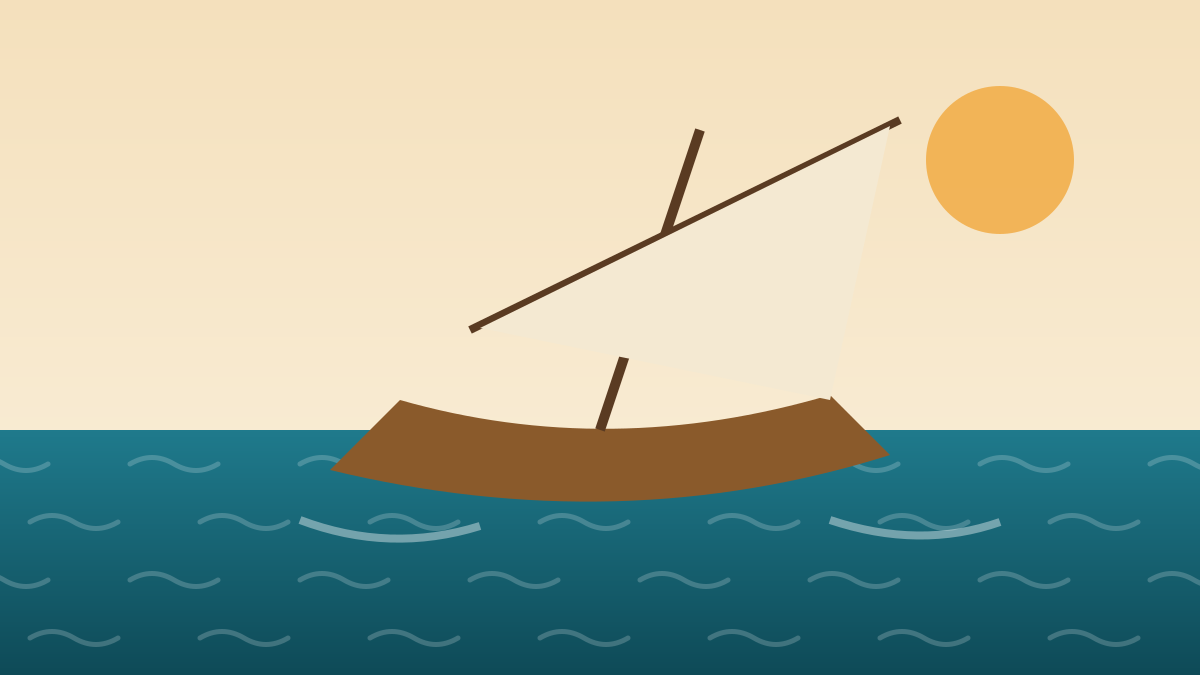
Dhows: the Indian Ocean's traders
Along the coasts of Arabia, East Africa and India, the dhow family carried the monsoon trade for centuries. Their triangular lateen sails harvested seasonal winds that reverse on schedule, letting captains sail to Africa on one monsoon and home on the next. Hulls once stitched with coconut fiber evolved into nailed planking; the silhouette — raked mast, sweeping yard — still marks harbors from Zanzibar to Oman, now mostly above a diesel engine.
Junks: engineering ahead of its time
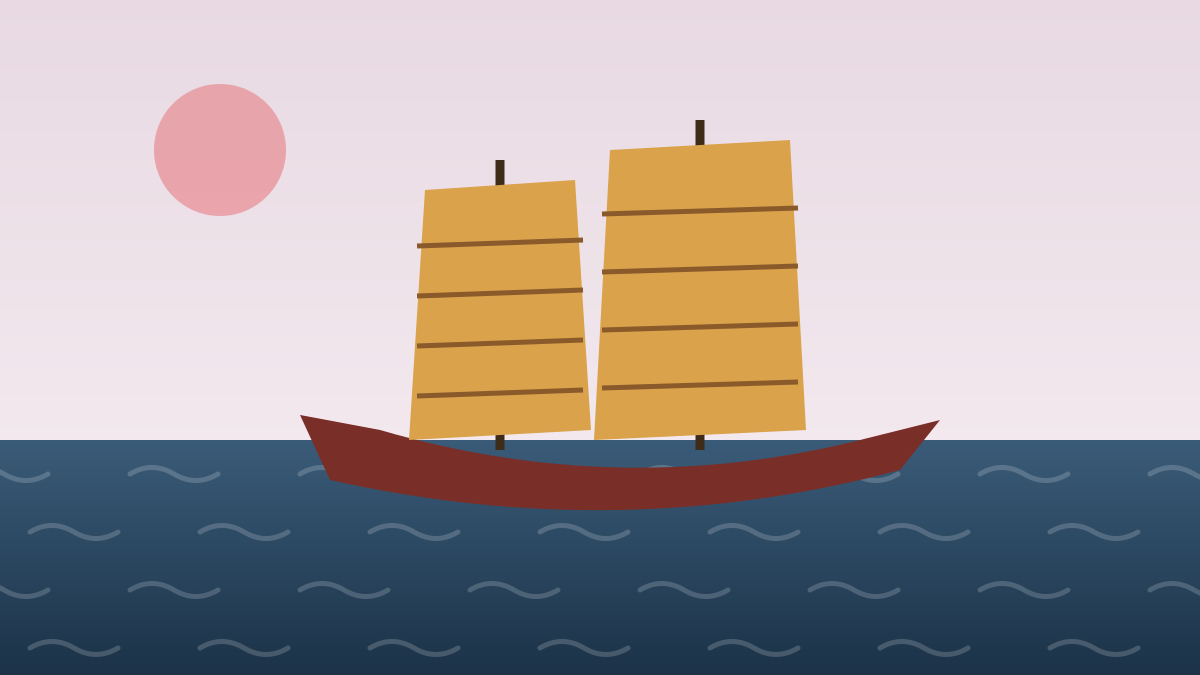
The Chinese junk looks exotic to Western eyes and reads like modern engineering on inspection. Sails stiffened by horizontal bamboo battens reef in seconds and keep shape in any breeze; hulls divided by watertight bulkheads resisted flooding centuries before iron ships adopted the idea. Junks traded across Asia in fleets, and their rig still converts admirers among modern cruising sailors.
Gondolas: a hull bent to its city
Venice demanded a boat for canals barely wider than an oar — and got the gondola: eleven meters of asymmetric hull, deliberately curved so a single gondolier, rowing on one side against a carved oarlock, drives it arrow-straight. Every line of it is negotiation with a city built on water; few boats anywhere are so perfectly site-specific.
Outriggers: the Pacific's answer
Across Oceania, narrow canoes gained stability not from beam or ballast but from the outrigger — a float on arms that turns a slender hull into a stable platform. Light, fast and seaworthy, outrigger and double-hulled canoes carried Polynesian navigators across the largest ocean on Earth, guided by stars and swells, in one of history's greatest feats of seafaring.
A shared logic, endless forms
Reed boats on Lake Titicaca, feluccas on the Nile, currachs on Irish surf, jangadas off Brazil — the catalogue is endless, the logic constant: available materials, local waters, working needs, refined by generations. Traditional boats are evolution made visible, each type a hypothesis the sea has already peer-reviewed.
Conclusion
Heritage boats are not primitive drafts of modern vessels; they are finished masterpieces of their contexts. Where they still sail — and thousands do — they carry more than cargo: they carry the memory of how their people learned the water.
Frequently Asked Questions
What is a dhow?
A family of traditional sailing vessels of the Arabian Sea and Indian Ocean, recognizable by triangular lateen sails, historically used for trade between Arabia, East Africa and India.
Why do Chinese junks have battened sails?
Horizontal bamboo battens make the sail easy to reef, hold an efficient shape, and keep working even if the cloth is damaged — a remarkably practical rig refined over centuries.
Why are gondolas asymmetrical?
A Venetian gondola's hull is built with a deliberate curve so a single gondolier rowing on one side can drive it straight through narrow canals.
Are traditional boats still used today?
Widely. Motorized dhows, feluccas, outriggers and countless local types still fish and ferry across the world, alongside heritage fleets kept sailing for culture and tourism.
Sources & Further Reading
- International Maritime Organization (IMO): imo.org
- US Coast Guard Boating Safety: uscgboating.org
- National Maritime Museum collections and references